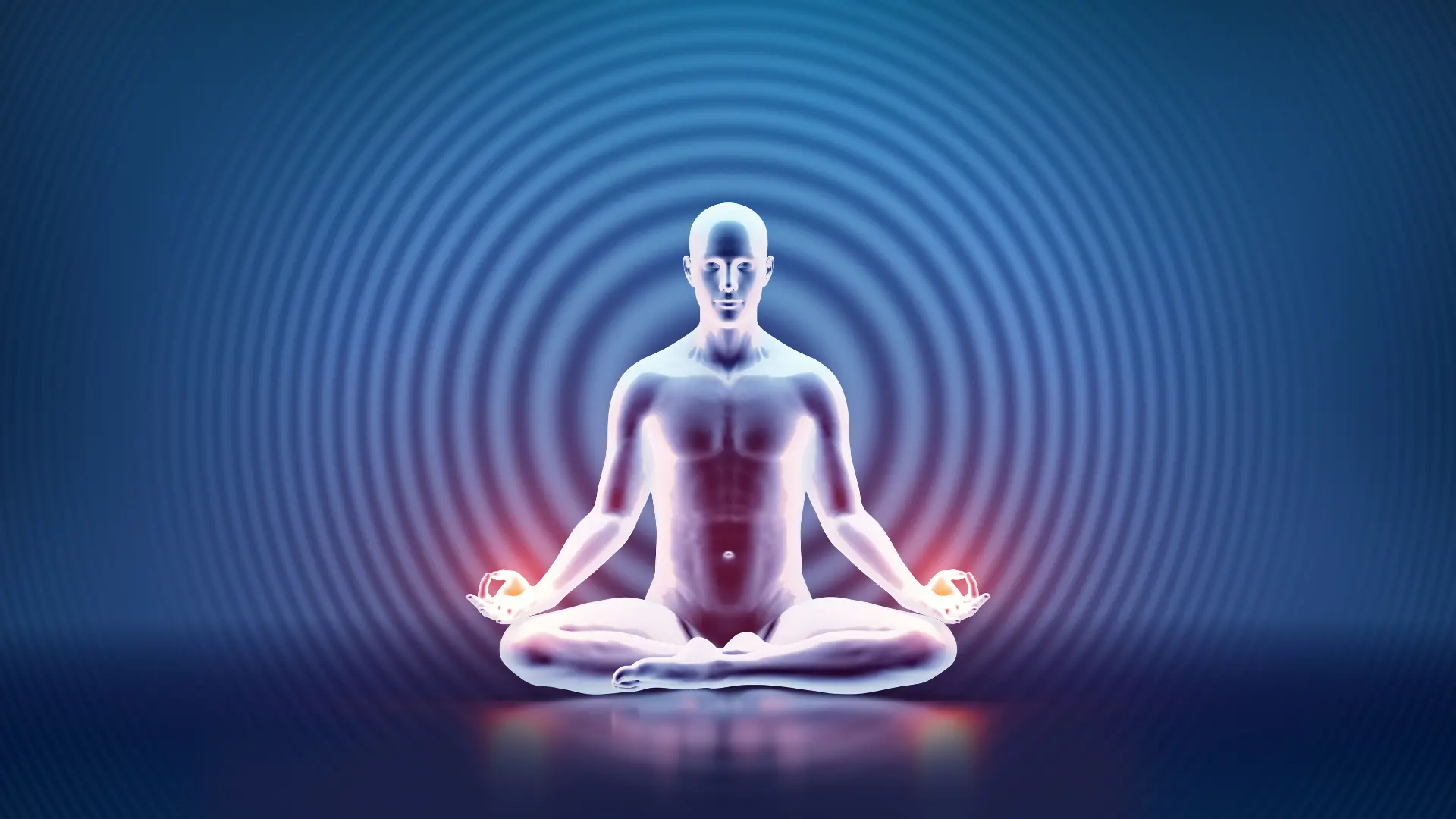
Psychosomatic Training, my own mind-body healing method, operates through a dual-lens framework, explaining its effects through the precise language of modern science and the experiential language of ancient spiritual traditions. These are not contradictory views but are two different maps describing the same territory: the actionable connection between your mind and your body.
The Psychosomatic Mind-Body Connection
The foundation of the training rests on the principle of psychosomatics—the understanding that the mind (psyche) and the body (soma) are a single, inseparable, bidirectional system. Your thoughts, beliefs, and emotions are not abstract events; they are biochemical and bioelectrical signals that constantly shape your physiology. Conversely, your physical posture, tension, and health send a constant stream of information back to your brain, influencing your mental state. A psychosomatic symptom, therefore, is not “all in your head”; it is a physical manifestation of an unresolved pattern within this unified system.
Influencing the Subconscious Mind-Body Map
Your life experiences, particularly unresolved traumas and ingrained habits, create a complex subconscious map within your mind-body system. This map dictates your automatic responses, your posture, and where you hold tension. Psychosomatic Training is a method for bringing this subconscious map into conscious awareness. It provides the tools to not only read the map—to feel the tension in your shoulder and connect it to a specific stressor—but to actively edit it. The training is a process of shifting from being a passive victim of your internal programming to becoming the active architect of your own inner mind-body map.
The Scientific Framework: Hacking the Nervous System
One does not need to believe in a spiritual dimension to benefit from Psychosomatic Training. The mechanisms it employs are physiological and have been validated in numerous studies of similar mind-body interventions.
Direct Nervous System Regulation
A core component is the use of specific somatic breathwork techniques. These exercises directly stimulate the vagus nerve, a primary component of the parasympathetic nervous system. Activating this “rest-and-digest” branch down-regulates the “fight-or-flight” stress response of the sympathetic branch, effectively “hacking” your autonomic nervous system (ANS) to induce states of deep calm and cellular repair. This process improves vagal tone—the biological index of stress resilience—mediated by the baroreflex mechanism, which coordinates heart rate with blood pressure.
Applied Neuroplasticity
The brain is not a static organ; it is constantly rewiring itself based on experience, a principle known as neuroplasticity. The focused attention, interoception, and visualization techniques used in the training actively create new, healthier neural pathways. This allows you to overwrite old, ingrained stress responses and pain patterns with new patterns of relaxation and balance. My own personal tests using a neurofeedback headband have confirmed these direct effects on the brain, revealing stable increases in theta brainwave activity (linked to deep meditation and subconscious access) and significant spikes in delta brainwaves (associated with deep healing and restorative states) during practice. This rewiring relies on long term potentiation (LTP), a process where synchronous neural firing strengthens synaptic connections, physically altering the brain’s microstructure.
Validated Precedents
The principles used in Psychosomatic Training are not theoretical. Systems like the Wim Hof Method, Tummo, and various yogic techniques have been scientifically shown to grant practitioners conscious influence over their immune and autonomic nervous systems. Other proven mind-body interventions, such as Progressive Muscle Relaxation and Autogenic Training, also demonstrate the mind’s ability to create measurable physiological change. Psychosomatic Training refines and integrates these same validated mechanisms into a cohesive system.
Mastering the Placebo Effect
Rather than dismissing the placebo effect, Psychosomatic Training operationalizes signal response expectancy. By ritualizing the healing process, we trigger the brain’s endogenous opioid system and dopamine pathways. This is not “fake” healing; it is the deliberate activation of psychoneuroimmunology—using conscious intent to modulate immune function and pain perception through the hypothalamic pituitary adrenal (HPA) axis.
The Spiritual Framework: Mastering the Biofield
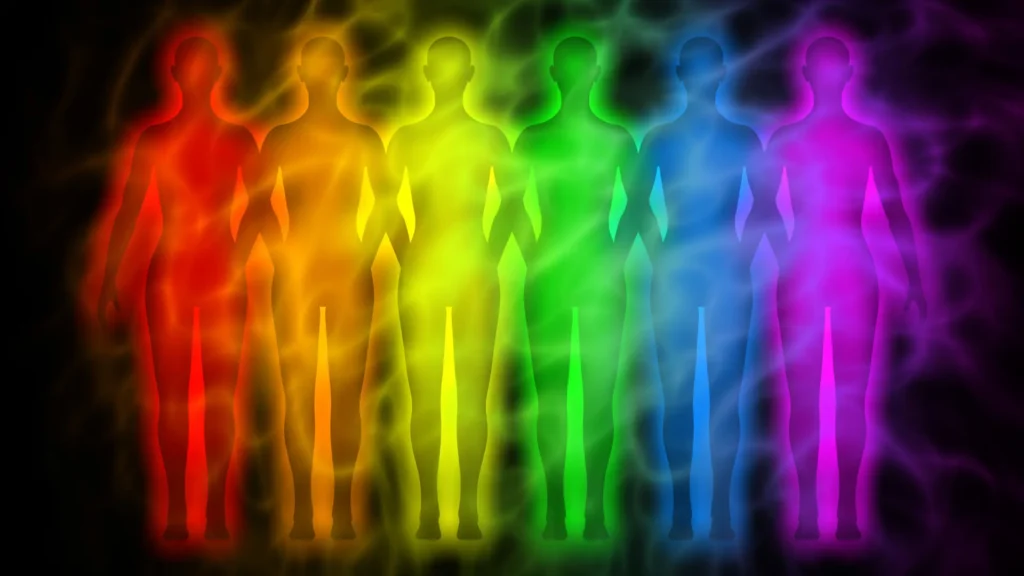
From a spiritual or energetic perspective, the mechanism is described in a different language but points to the same truth. In this framework, the human being is a system of vibrating energy, or a biofield (also known as the aura or subtle energy field). Unresolved trauma, negative emotions, and limiting beliefs manifest as dense, stagnant, or disruptive patterns within this field—known as energetic blockages. Modern biophysics studies this as bioelectromagnetism, the measurable electromagnetic fields produced by living cells, particularly the heart and brain.
The Biofield and Subtle Bodies
The biofield functions as a super-regulatory system of information exchange. Esoteric traditions tend to map map this as subtle bodies, which correlate to varying frequencies of bio-photonic emission; e.g., the etheric body parallels the body’s electromagnetic blueprint, while the astral body represents the emotional-somatic feedback loop. Healing occurs when coherence is restored to these oscillating fields, correcting the interference patterns that manifest physically as disease.
The Role of Chakras and Nadis
This energy system has a defined structure. Chakras act as major energy centers or processing hubs that govern specific physiological and psychological functions. These centers are connected by a vast network of energy channels called Nadis (or meridians in TCM). A blockage in a Nadi disrupts the flow of Ki (or Prana) to a chakra, leading to dysfunction. The training teaches you to perceive this inner architecture and direct energy to clear these pathways and balance the chakras.
Clearing Energetic Imprints and Thoughtforms
Chronic thoughts and intense emotions do not just disappear; they create cohesive energetic structures within the biofield known as thoughtforms or energetic imprints. These imprints can act like magnets, attracting similar experiences and reinforcing old patterns. Psychosomatic Training involves techniques to identify these specific imprints, understand their origin, and use focused Ki energy manipulation and visualization to dissolve them, freeing up the energy that was once bound by them.
The Principle of Resonance and Intention
From this perspective, a practitioner’s focused intent is a tool that guides the path. By holding a coherent and clear energetic state, the practitioner creates a resonant field. This resonance acts like a vibrational tuning fork, helping the client’s own energy field to “remember” its natural, healthy frequency. This process helps to dislodge dissonant patterns (blockages) and allows the client’s system to harmonize itself from within. Healing is the process of purifying your own energy system, with the practitioner acting as a guide and a catalyst.
A Unified Model: Where Science and Spirit Meet
These two frameworks are not in conflict; they are perfectly complementary descriptions of a unified reality.
- An energetic blockage in the spiritual model corresponds to a dysregulated neural pathway, chronic muscle contraction, and localized inflammation in the scientific model.
- Cleansing the biofield with Ki is the spiritual description for promoting a parasympathetic state, releasing stored tension, and using neuroplasticity to create new patterns in the scientific description.
This unified model makes the training accessible to everyone, whether you identify as a spiritual seeker or a pragmatic bio-hacker. The underlying reality of the mind-body connection operates regardless of the language we use to describe it.
Fascia and Piezoelectricity
To understand how energy moves through physical tissue, we must examine the extracellular matrix (ECM), specifically the fascia. This connective tissue network envelops every nerve and organ, acting as a liquid-crystalline communication system. Through a phenomenon called piezoelectricity, mechanical pressure (from breathwork or movement) is converted into electrical signals. This validates the concept of Nadis/Meridians: they are not imaginary lines, but pathways of least resistance within the fascial web where bio-electricity flows. Trauma causes fascial densification (fibrosis), inhibiting this flow; Psychosomatic Training utilizes mechanotransduction to physically remodel these tissues and restore signal conductivity.
The Role of the Practitioner’s Intent
In Psychosomatic Training, the therapist/master is not just the healer; they are a facilitator and a teacher. My role is to guide you and, crucially, to help you state a clear and coherent intent. This focused intent helps to create a resonant field that makes it easier for you to access and regulate your own internal states. The therapist provides the map, the tools, and a safe environment, but it is you who learns to navigate your inner world and achieve the results. The power is, and always was, within yourself.