No, Reiki and the formal Pranic Healing system are not the same. They are two distinct modalities of energy healing, each with its own unique philosophy, principles, and techniques.
The confusion is completely understandable. Both systems work with the same raw material: “universal life force energy.” What Reiki calls Ki, Pranic Healing calls Prana. But how they work with that energy is fundamentally different.
As a Reiki Master-Teacher, I respect both systems. The simplest way to frame the difference is that a Reiki practitioner is a passive conduit (like a garden hose), while a Pranic Healing practitioner is an active technician (like a focused pressure washer).
The Confusion: “Pranic Healing” vs. “pranic healing”
The single biggest source of confusion is the term itself.
- “Pranic Healing” (Proper Noun): This is the specific, non-touch healing system founded by Master Choa Kok Sui. It is a structured, technical, and codified modality, much like “Reiki” is a system founded by Mikao Usui.
- “pranic healing” (Descriptive Term): This is a general, descriptive phrase that literally means “healing with prana.”
In this general sense, any energy healing practice is a form of “pranic healing.” Reiki is “pranic healing.” Qigong is “pranic healing.” They all use the same universal life force energy. However, Reiki is not the Pranic Healing system.
Usui Reiki: A System of Passive Channeling
In traditional Usui Reiki, the practitioner is attuned by a Reiki Master. This attunement opens the practitioner’s channels to become a “hollow bone” or a passive conduit for universal life force energy (Ki).
- The Role: The practitioner is a channel, not the “doer.”
- The Process: The practitioner places their hands lightly on or just above the recipient’s body. The recipient’s body, in its own wisdom, draws the precise amount of energy it needs.
- The Feel: It is generally a very gentle, intuitive, and holistic process aimed at creating deep relaxation and balance, allowing the body’s innate healing to take over. The energy is intelligent and “goes where it needs to go.”
Pranic Healing: A System of Active Technique
The Pranic Healing system founded by Master Choa Kok Sui is, by contrast, an active, technical, and highly structured modality. It is a non-touch system where the practitioner works on the recipient’s energy body (aura) as a “technician” following specific protocols.
The Three-Step Process
A Pranic Healing session is defined by a multi-step process:
- Scanning: The practitioner actively uses their hands to “scan” the recipient’s aura and chakras to find energetic imbalances, which are felt as “congestion” (too much energy) or “depletion” (too little energy).
- Cleansing/Sweeping: This is the most critical step. Before adding any “good” energy, the practitioner must first remove the “diseased” or “dirty” energy. They use active, sweeping hand motions to cleanse the aura and chakras, similar to energetic hygiene. Extracted congestion is discarded into a localized saltwater disposal unit to prevent somatic absorption or spatial contamination.
- Energizing: Following systemic extraction, the healer utilizes controlled Pranic Breathing to project localized, high-density Color Prana. Specific hues are applied to targeted energetic vertices to accelerate cellular regeneration or sedate inflammatory responses.
Differences from Reiki
- Reiki is passive; Pranic Healing is active.
- Reiki lets the body draw energy; Pranic Healing involves the practitioner actively projecting it.
- Reiki is often (though not always) “hands-on”; Pranic Healing is a strictly “non-touch” modality.
- Reiki is intuitive; Pranic Healing is highly technical and “protocol-driven,” with specific procedures for different ailments.
- Reiki applies a generalized energetic saturation regardless of pathology; Pranic Healing deploys ailment-specific algorithms cross-referencing targeted anatomical regions and distinct frequencies.
Diagnostic and Educational Distinctions
The pedagogical trajectories and diagnostic paradigms of these systems contrast sharply.
Epistemological Origin
Reiki, founded in early 20th-century Japan, relies heavily on intuitive Byosen scanning (sensing energetic disruptions via localized hand feedback). Pranic Healing, synthesized in the late 20th century in the Philippines, aggregates esoteric traditions into a highly empirical, reproducible clinical-like framework.
Practitioner Mechanics
Reiki relies on the universal energy reservoir, ensuring the practitioner’s bio-energetic reserves remain undepleted. Pranic Healing requires strict energetic hygiene and physical cultivation to generate and direct projective force safely without exhausting the practitioner’s endogenous Prana/Ki.
A Shared Foundation, Different Methods
Despite these major differences, both systems operate from the same fundamental truths, which is why they are often grouped together. As someone who works with energy, I recognize that most energy healing practices are branches of the same tree.
Both Reiki and Pranic Healing:
- Acknowledge that a “life force energy” (Ki or Prana) animates the physical body.
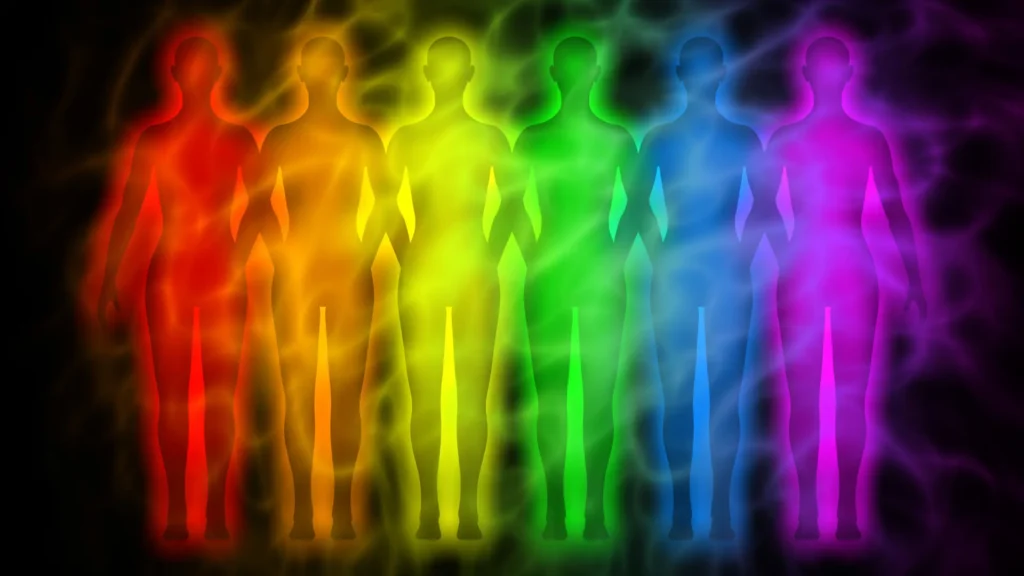
- Recognize that this energy flows through an energetic anatomy (the aura).
- Agree that this system has energy centers (chakras) that govern physical and emotional health.
- Believe that “blockages” in this system lead to dysfunction and illness.
They are simply two different, valid, and powerful “languages” for achieving the same goal: clearing the blockages, restoring the flow of energy, and bringing the body back into a state of balance.